01 Jun 2026
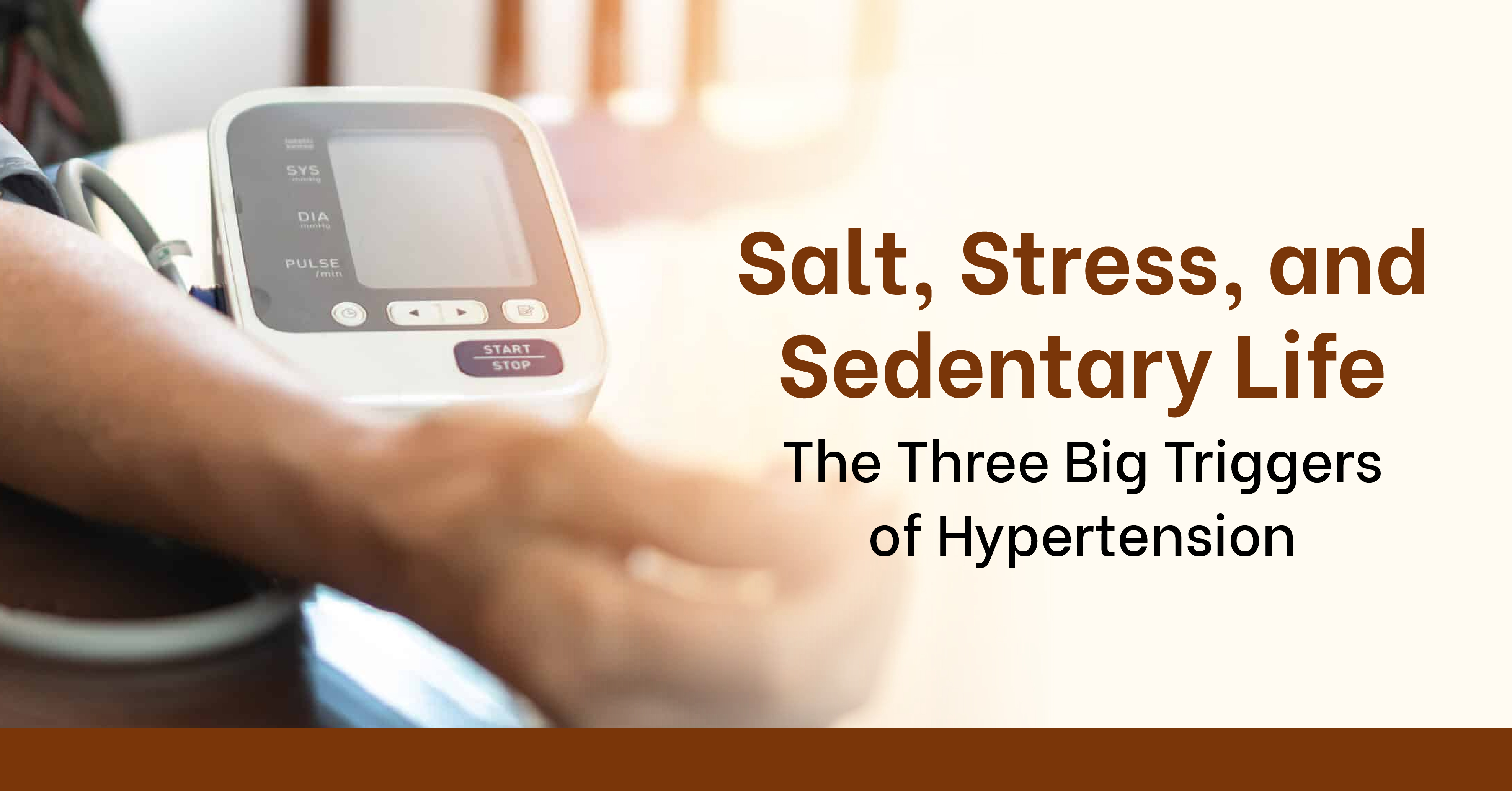
Every two seconds, somewhere in the world, a person suffers a heart attack or stroke linked to uncontrolled blood pressure. Yet hypertension - the persistent elevation of force against artery walls - is largely preventable. Three everyday lifestyle factors are most responsible for its global rise.
Blood pressure is measured in two numbers - systolic (pressure when the heart beats) and diastolic (pressure between beats). A reading consistently at or above 130/80 mmHg is classified as hypertension by most international guidelines. What makes it dangerous is its silence: it rarely causes noticeable symptoms while steadily increasing the risk of heart attack, stroke, kidney disease, and vision loss.
Science points to dozens of contributing factors, but three lifestyle triggers dominate: excessive sodium intake, chronic psychological stress, and physical inactivity. Each operates through a distinct biological pathway - and together, they compound damage that takes years to reverse.
Sodium is essential - it regulates fluid balance and nerve function. The problem is quantity. When sodium intake is consistently high, the kidneys struggle to excrete the excess. To dilute it, the body retains more water, increasing blood volume. Greater blood volume means the heart must pump harder, driving up pressure throughout the arterial system.
The World Health Organization recommends fewer than 5 grams of salt per day (roughly one teaspoon). Yet the global average is almost double that - largely because ultra-processed foods, restaurant meals, bread, sauces, and cured meats contain hidden sodium in staggering amounts.
The real culprit is not just high sodium but the imbalance between sodium and potassium. Potassium - abundant in bananas, sweet potatoes, leafy greens, and lentils - helps the kidneys excrete sodium. Modern diets tend to be high sodium and low potassium: precisely the combination most damaging to blood pressure regulation. Restoring this balance through dietary change is one of the most evidence-supported non-pharmacological interventions for hypertension.
Reducing daily salt intake by just 1 gram can lower systolic blood pressure by approximately 1-2 mmHg - a seemingly small shift that translates to a measurable reduction in cardiovascular event risk across a population.
Practical steps: Read nutrition labels and choose products with less than 120 mg sodium per 100 g. Cook from scratch using herbs, lemon, and spices instead of salt. Swap processed snacks for whole foods rich in potassium. Request sauces and dressings on the side when dining out.
Stress is a built-in survival mechanism. When the brain perceives a threat - whether a predator or a looming work deadline - it activates the hypothalamic-pituitary-adrenal (HPA) axis, flooding the bloodstream with cortisol and adrenaline. These hormones temporarily raise heart rate and constrict blood vessels, boosting blood pressure to prepare the body for action. This is healthy and adaptive in short bursts.
The danger lies in chronicity. Modern stressors - financial pressure, relationship conflict, workplace overload, social media anxiety - rarely resolve in minutes. Sustained cortisol elevation keeps the cardiovascular system in a state of prolonged activation. Over months and years, this strains arterial walls, promotes inflammation, disrupts sleep, and encourages sodium retention - all of which push blood pressure upward.
Chronic stress does not only act directly on blood vessels. It also drives behaviors that independently harm blood pressure: disrupted sleep, overeating (especially salty and processed foods for comfort), increased alcohol consumption, and physical inactivity. Stress and hypertension thus exist in a self-reinforcing loop - higher pressure can itself cause anxiety, which raises cortisol further.
Studies on mindfulness-based stress reduction programs show that consistent practice - as little as 20 minutes daily - can lower systolic blood pressure by 4-5 mmHg, comparable to some low-dose antihypertensive medications.
Practical steps: Practice diaphragmatic breathing for 5-10 minutes daily to activate the parasympathetic nervous system. Prioritize 7-9 hours of quality sleep; poor sleep is a direct driver of cortisol elevation. Set firm boundaries around digital communication outside work hours. Consider evidence-based therapies such as Cognitive Behavioral Therapy (CBT) for chronic anxiety.
The cardiovascular system is engineered for movement. Regular aerobic activity trains the heart to pump more blood per beat, slowing the resting heart rate and reducing the pressure required to circulate blood. It also triggers the release of nitric oxide - a molecule that relaxes and widens blood vessels. Sedentary individuals produce less nitric oxide, leading to stiffer, narrower arteries that require greater force to perfuse.
The global shift toward desk-based work, screen-heavy leisure time, and car-dependent transport has made physical inactivity an epidemic. The World Health Organization estimates that over 1.4 billion adults are insufficiently active - a major driver of the hypertension burden worldwide.
Prolonged sitting - even in people who exercise regularly - has been identified as an independent risk factor for cardiovascular disease. Long periods of uninterrupted sitting reduce blood flow to the legs, impair vascular function, and blunt insulin sensitivity, all of which negatively affect blood pressure regulation. Breaking up sitting time every 30-45 minutes with short movement breaks is now recommended alongside formal exercise.
The American Heart Association recommends at least 150 minutes of moderate-intensity aerobic exercise per week. Consistent adherence can reduce systolic blood pressure by 5-8 mmHg in hypertensive individuals.
Practical steps: Walk briskly for 30 minutes on most days. Use a standing desk or set a timer to stand and stretch every 45 minutes. Incorporate resistance training twice weekly. Take the stairs, park further away, and walk during phone calls - these micro-activities accumulate significantly.
None of these three triggers operates in isolation. A person under chronic stress is more likely to reach for salty processed foods for quick energy. Physical inactivity worsens stress tolerance and disrupts the hormonal systems that regulate sodium excretion. High sodium intake disrupts sleep quality, which elevates cortisol the next day. The result is a tightly interlocked triad that amplifies hypertension risk far beyond the sum of its parts.
Addressing all three simultaneously - rather than targeting only one - is consistently shown in clinical research to produce the greatest reductions in blood pressure. Even modest improvements across each domain, sustained over months, can meaningfully reduce the need for pharmacological intervention and dramatically lower long-term cardiovascular risk.
Hypertension is called the "silent killer" not because it is inevitable, but because it advances quietly while daily habits go unchecked. Salt, stress, and sedentary living are not abstract risk factors - they are decisions woven into routines that can be rewoven. Cutting hidden sodium, building stress resilience, and reclaiming daily movement are not radical prescriptions. They are the most powerful tools available for keeping blood pressure within a range that protects every organ the heart serves. If you have not measured your blood pressure recently, today is the right time to start.
A reading of 180/120 mmHg or higher is classified as a hypertensive crisis and requires immediate medical attention. Readings consistently at or above 130/80 mmHg are diagnosed as hypertension Stage 1 and warrant lifestyle changes and, in many cases, medication.
Q2. Can you reverse hypertension through lifestyle changes alone?For Stage 1 hypertension (130-139/80-89 mmHg), lifestyle modifications - primarily dietary changes, regular exercise, stress management, and weight control - can normalize blood pressure in many people without medication. Stage 2 hypertension typically requires medication alongside lifestyle change.
Q3. How quickly does reducing salt lower blood pressure?Studies show measurable reductions in blood pressure within 2-4 weeks of sustained sodium reduction. However, "salt-sensitive" individuals - more common among older adults and people of African descent - may see faster and more pronounced responses.
Q4. Does stress alone cause permanent hypertension?Acute stress causes temporary spikes. Chronic, unmanaged stress can contribute to sustained hypertension through prolonged cortisol elevation, poor sleep, and unhealthy coping behaviors. Stress management is therefore a legitimate and recommended component of hypertension treatment.
Q5. Is it safe to exercise if you already have high blood pressure?Yes, and it is actively recommended. Regular moderate-intensity aerobic exercise is one of the most effective non-drug interventions for hypertension. However, those with very high readings (above 160/100 mmHg) should consult a doctor before starting a new vigorous exercise program.